BetterDocket for estate planning

From intake questionnaire to signing, without the email chase.

Drafting is the fast part of an estate plan. The slow part is waiting for the asset list, the deed, the beneficiary details, and the client's answer on the draft. BetterDocket turns that waiting into a visible request list and a draft review the client can complete from a phone, so a two-week plan stops becoming a two-month one.

The problem

Where estate planning time actually goes.

Missing client information

Account lists, property deeds, policy numbers, beneficiary names and addresses. The plan cannot be finished without them, and they arrive in fragments over weeks, usually after a reminder call your staff had to remember to make.

Silent drafting periods

While you draft, the client hears nothing, and some conclude nothing is happening. The reassurance call costs more than the update would have, and it interrupts the drafting it is asking about.

Draft review by attachment

Sending a will or trust as an email attachment means comments come back as a reply-all, a printed and scanned markup, or a phone call about page six. Which version the client actually read is anyone's guess.

How it runs

A estate planning matter in BetterDocket.

Stage by stage, from the first call to the closed file, each step is something the product does today.

  1. Collect the basics as a Prospect Case

    Open a Prospect Case for the initial consultation and request the intake questionnaire and a current list of accounts. The prospect sees a single documents page. Nothing bills until you accept the matter.

    See how
  2. Accept and seed the plan's phases

    Your estate-planning template sets the phases: Information gathering, Drafting, Review, Signing, Funding. Each phase has the Firm's tasks and a plain-English note the Client reads in the portal, so “we are drafting” is something they can see rather than something they call to confirm.

    See how
  3. Request every document with a due date

    Deeds, account statements, life-insurance policies, prior wills, business agreements. Each is a Document Request with instructions. Clients upload from a phone camera, mark “I don't have this” when it is true, and daily reminders continue until each item is answered.

    See how
  4. Post one update during drafting

    “Drafts in progress. We expect to send your documents for review within two weeks.” A templated Status Update, posted once, is visible every time the Client checks the portal. Stale-update detection reminds you when a Client has gone too long without hearing from you.

  5. Send the draft for review

    Upload the will or trust as a numbered Draft Version and send it for review. The Client approves, requests changes with a note or a marked-up copy, or flags that they would like a call. A new version supersedes the pending review automatically. Work in progress stays Firm-only.

  6. Set the signing date and gather availability

    Add the signing meeting as a Key Date the Client can see. Clients share availability blocks for witnesses and notary scheduling without any calendar integration. Upcoming client-facing dates surface in your Today queue.

  7. Invoice, share the final set, and close

    Issue the flat-fee or hourly invoice from BetterDocket and record the payment when it arrives. Share the executed documents to the portal's “From your firm” list, then close the Case with a closing note. It archives automatically and stays readable to the Client.

    See how

Client Portal

What your estate planning client sees.

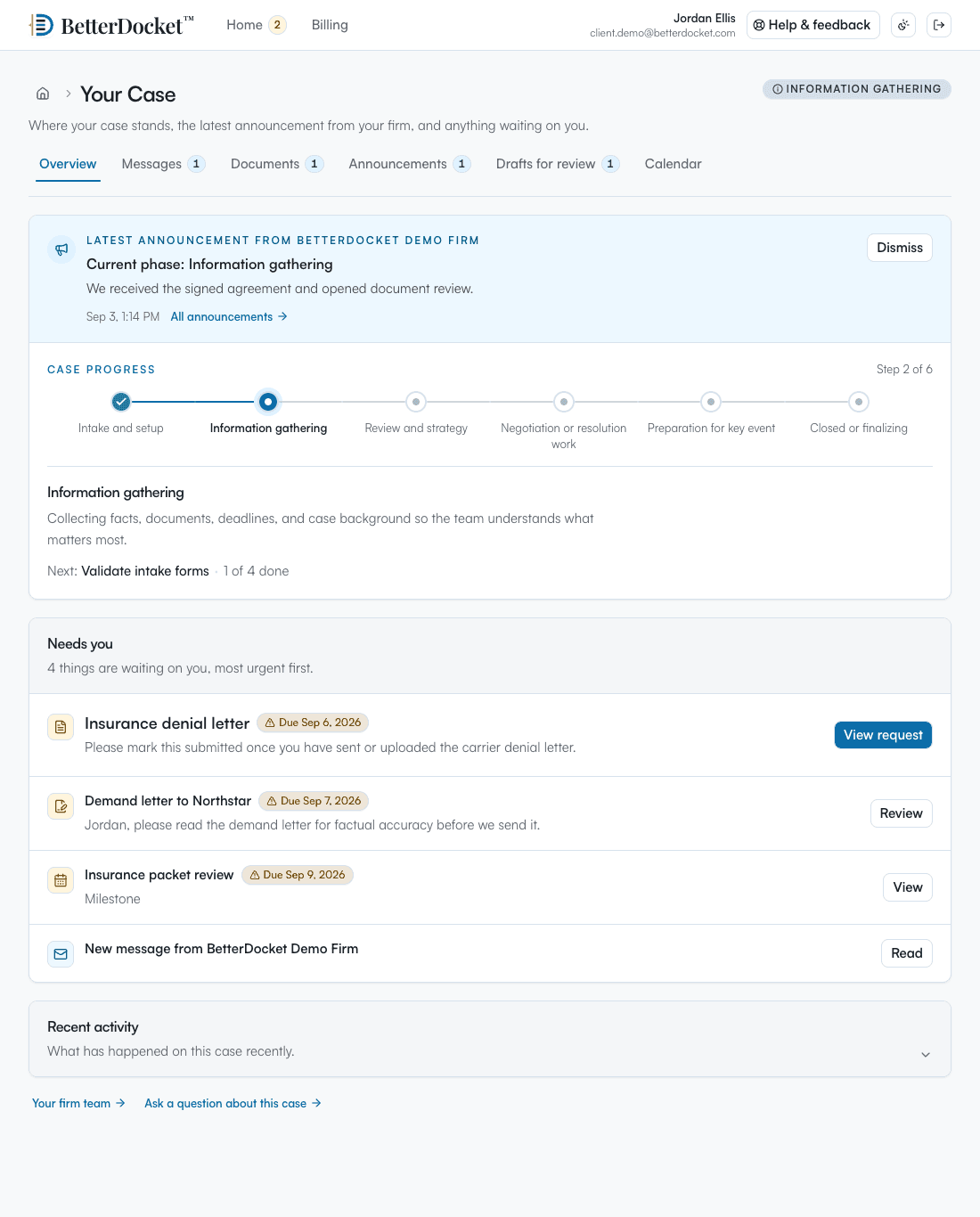
One private page in any browser: the current phase in plain English, the latest word from your Firm, the documents you have asked for, and what happens next. No app to install. Uploads work from a phone camera. Firm-only folders, notes, and drafts in progress never appear here.

Client portal

Your case

Okafor family trust

Review

From your firm · today

Your revocable trust and pour-over wills are ready for review. Open the draft below, then approve it or tell us what to change.

What we need from you

  • Review: Trust agreement v2Awaiting you
  • Deed to 14 Linden CourtReceived
  • Life insurance policy summaryDue Mon

Next step

Signing is tentatively the week of November 3. Share the mornings you are free.

Preview of the BetterDocket client portal on a phone-sized frame.
BetterDocket Client Portal showing Case progress, next steps, and open requests
Where the case stands, in plain English

Why it fits

The follow-up handles itself.

Self-reminding requests

Request the asset list, deeds, and policies through the matter, each with a due date. Clients upload directly into the Case, reminders run daily on anything outstanding, and you see at a glance what is still missing before you draft.

Connected draft review

Draft Documents live on the Case with numbered versions. Send one for review and get a decision back in the portal: approved, changes requested with a markup, or “can we talk?” Nothing about a draft lives in an email thread.

A portal older clients can use

Clients follow an invitation link in the browser. No app store, nothing to install, no account maintenance. They see status, next steps, and what is asked of them. If a client still prefers paper, your Firm can upload on their behalf.

A path the client can see

Phases sized by the work behind them show the client that Drafting is underway and Signing is next, which answers the question before the phone rings.

Deliberately focused

What BetterDocket does not do for estate planning.

BetterDocket organizes the administrative work around a matter. The legal work, and the tools you already use for it, stay where they are.

  • It does not assemble wills, trusts, or powers of attorney. Draft Review carries documents produced in the drafting tools you already use.
  • It does not give legal or tax advice, and the Client guide in the portal explains only what your Firm has shared.
  • It does not manage trust accounting or collect payment. It issues invoices and records payments received elsewhere.
  • It does not store documents as a vault for heirs. Closed Cases stay readable to the Client, but this is your working file, not a digital-estate service.

Keep reading

Related guides

Questions.

Can clients review draft documents in BetterDocket?

Yes. You send a numbered Draft Version for review; the Client approves or requests changes, with a note or a marked-up copy, and can flag that they would like a call. Work-in-progress versions stay Firm-only until you send them.

Will older clients manage the portal?

The portal is a single private page in the browser showing status, next steps, and open requests. No installation, no account maintenance. Uploading a document works from a phone camera. If a client still prefers paper, your Firm can upload on their behalf.

Can a couple share one case?

Yes. Add both spouses as Clients on the Case. Each sees the same client-visible status, updates, drafts, and requests, while each person's messages and read state stay private. You can send a Document Request to one of them or both.

Does it help with flat-fee billing?

Invoices combine time entries and manual lines, so a flat fee is one manual line. The issued invoice is a permanent PDF, reminders go out on the due date, and you record the payment when it arrives. BetterDocket never moves the money.

Does BetterDocket assemble wills or trusts?

No. It carries your drafts, updates, and document requests, but document assembly and legal drafting stay in the tools you already use. BetterDocket organizes the administrative work; it does not do the legal work.

Finish estate plans on your timeline, not the inbox's.

Requests that remind themselves. Drafts reviewed in one place.

14 days. No card.