A visible Case path
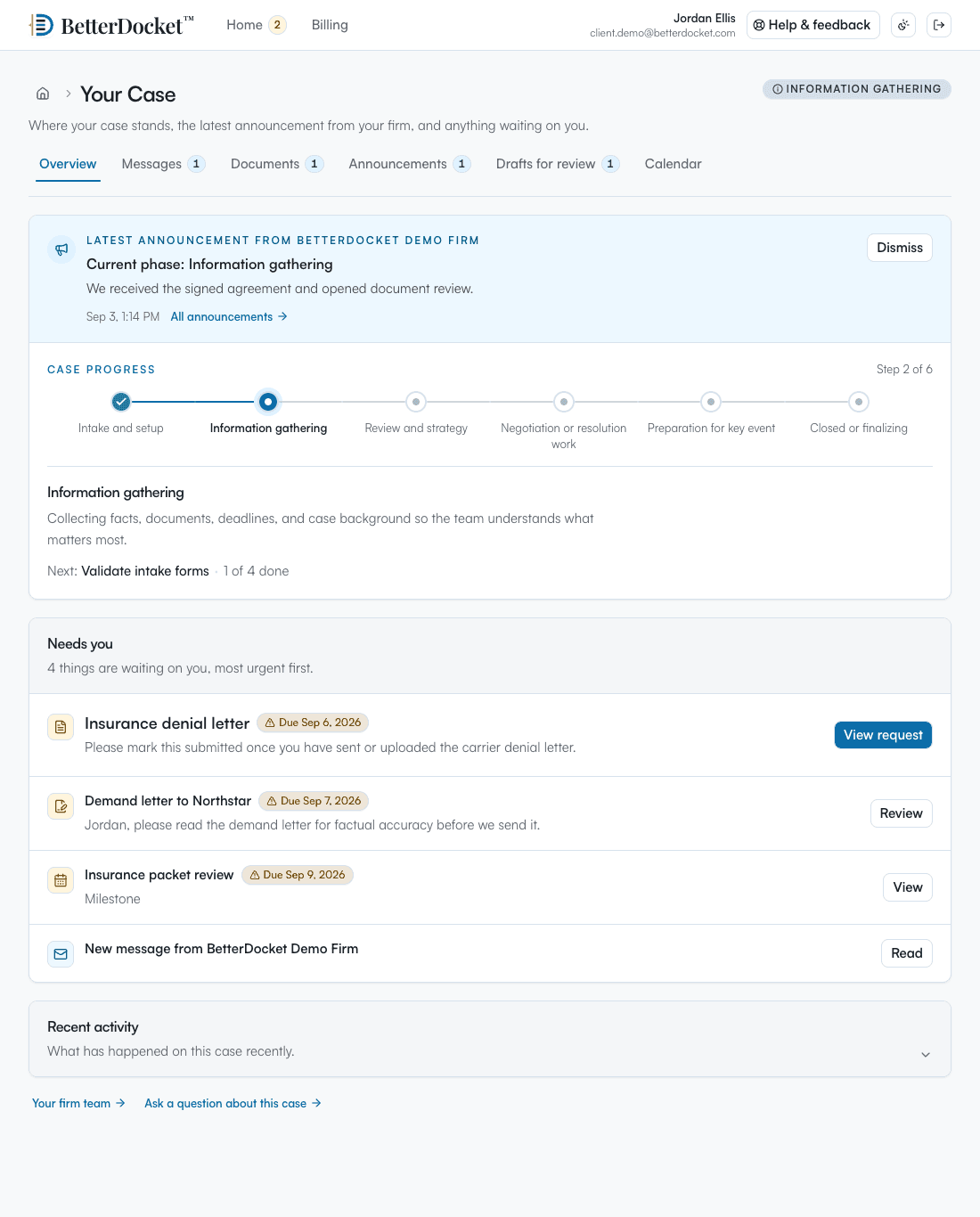
Treatment, records collection, demand, and negotiation stay visible as phases sized by the work behind them, while the Client sees the current phase and what comes next in plain English.
BetterDocket for personal injury
A contingency client has no invoice telling them work happened. Between engagement and settlement sit months where the case is moving, records are being requested, and treatment is finishing, but nothing feels different to the person waiting. That is when the weekly status calls begin. BetterDocket makes progress visible so the calls stop being necessary.
The problem
Records requests to providers take weeks. Treatment takes months. Demand and negotiation take longer. From the client's side each of those is silence, and silence reads as neglect, so they call, and your intake coordinator answers the same question for the fifth time.
Medical bills, wage documentation, photos of the scene and the injuries, the police report number, the insurance declarations. A PI file is built from documents the client and providers deliver slowly, and every missing one is another round of chasing before demand.
Without visible progress, some clients conclude their case has gone to the bottom of the pile. Some start calling the adjuster themselves. A few go looking for another lawyer. None of that is about the work; it is about what they can see.
How it runs
Stage by stage, from the first call to the closed file, each step is something the product does today.
Open a Prospect Case at the first call and request the police report, insurance card, and photos. The prospect uploads from their phone to a single documents page. Nothing bills, and if you decline the matter you delete the prospect.
See howYour PI template seeds the phases the client will live through: Treatment, Records collection, Demand, Negotiation, Resolution. Each phase carries the Firm's tasks and a plain-English explanation, so “we are collecting records” is something the Client can read rather than something they need to hear.
See howBills as they arrive, wage-loss letters, photos of the injuries over time, receipts for out-of-pocket costs. Each is a Document Request with a due date. Uploads land on the Case organized by request, daily reminders chase the stragglers, and your team sees exactly what is still missing before demand.
See how“Records requested from Mercy General on the 3rd. Providers typically take 30 to 45 days; we will update you when they arrive.” One templated Status Update lands in the portal and the updates feed. Stale-update detection flags any client who has gone too long without one.
The independent medical exam, the deposition, the mediation. Add them as Key Dates the Client can see. Clients share availability blocks so scheduling stops being a phone-tag exercise, without any calendar integration.
Send the demand letter or the settlement statement as a numbered Draft Version for the Client's review. They approve, request changes, or flag that they would rather talk. Your working versions stay Firm-only.
Close the Case with a closing note the Client sees. It archives automatically to cheap storage and stays readable to both sides. Export a complete copy of the file at any time for your own retention duties.
Client Portal
One private page in any browser: the current phase in plain English, the latest word from your Firm, the documents you have asked for, and what happens next. No app to install. Uploads work from a phone camera. Firm-only folders, notes, and drafts in progress never appear here.
Your case
From your firm · today
We requested your records from Mercy General on the 3rd. Providers typically take 30 to 45 days. We will post an update the day they arrive.
What we need from you
Next step
Keep uploading bills as they arrive. Nothing else is needed from you right now.
Why it fits
Treatment, records collection, demand, and negotiation stay visible as phases sized by the work behind them, while the Client sees the current phase and what comes next in plain English.
Ask the client for photos, bills, and wage records through the matter. Uploads land in the Case, reminders run daily, and open versus received is obvious to both sides.
A one-click Status Update from a template reassures the client that someone is on it, and stays in their feed for the next time they wonder.
PI firms carry many open matters at once. Today ranks them by what needs you: an unread message, a request past due, a client who has not heard from you, a deposition next week.
Deliberately focused
BetterDocket organizes the administrative work around a matter. The legal work, and the tools you already use for it, stay where they are.
Keep reading
Post one visible status update per milestone in a place clients can check themselves — a portal — instead of returning each call. Here is the playbook.
Read the guideStop reconstructing priorities from inboxes. An attention queue built from four signals — unread, pending, stale, upcoming — tells you where to look.
Read the guideMake every request itemized, visible, and self-reminding: one list the client can see, uploads that land in the matter, and automatic follow-up.
Read the guideThat is the core of what it does. Clients see phase, status, the latest Firm update, and next steps in their portal, so the routine “is anything happening?” call stops being necessary. Firms post an update once instead of returning five calls.
Yes. Clients upload directly into their Case, from a phone camera if that is easiest, either answering a specific Document Request or adding what you have asked for. Files land in the matter, not in a personal inbox.
Pricing is $10 per Firm plus $1 per open Case per month, prorated by day, with unlimited team members. Closed Cases archive automatically at $0.20 per month and stay readable. Estimate your number on the pricing page.
No. Time tracking and invoicing are there when you want them; a contingency file can simply never use them. Visible progress in the portal is what stands in for the invoice as proof of work.
No. It does not perform legal analysis, valuation, or negotiation support. It keeps your client informed and your file complete; the judgment stays entirely with your Firm.
Progress, requests, and updates in one portal. Fewer calls to return.
14 days. No card.